
Reviewed · SCUBA DIVING
PADI Open Water Diving Certification Course Activity
Certification, but make it underwater art.
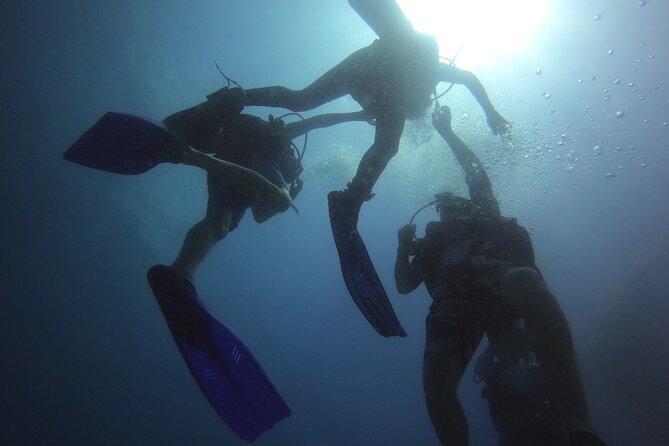
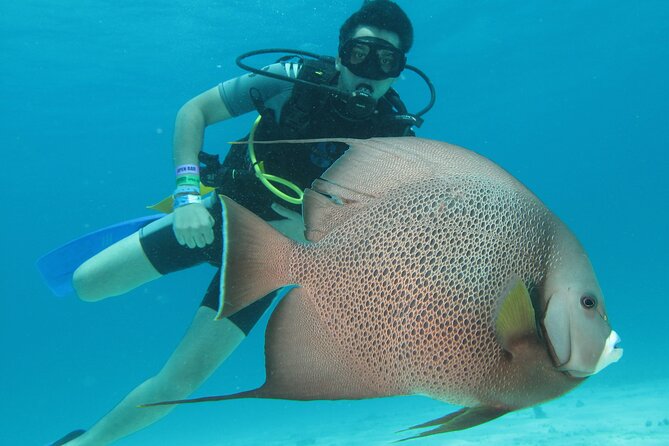
This two-day PADI Open Water course in Cancun is interesting because it mixes classroom theory, pool skill practice, and four ocean sessions that include the Underwater Museum of Art (MUSA). I like that gear rental is handled for you, so you can focus on learning instead of scrambling for equipment. I also like the small-group format, with up to 4 people, which makes it easier to ask questions before you ever go in the water. One possible drawback to budget for up front: government fees ($20 per person) and wetsuit rental ($10 per person) are not included.
The crew matters in a course like this, and the team at Coconut Divers has a solid track record. In one recent group, the captain was Ricardo, the instructors included Manuel and Ulysses (described as giving clear English), and photographer Poncho helped capture the experience. That kind of support makes the whole schedule feel calmer, even if you are watching the sea surface for any surprises.
In This Review
- Key things I’d circle before you book
- What You’re Really Getting From PADI Open Water in Cancun
- Price, Value, and What Your Final Total Might Look Like
- Coconut Divers’ Small-Group Format (and Why It Helps You Learn Faster)
- Theory and Pool Skills: Where Confidence Is Built
- Stop 1: Museo Subacuatico de Arte (MUSA) and Learning in Real-World Water
- Stop 2: Isla Mujeres, Plus the Caribbean Feel Between Sessions
- What the Instructor Team Adds (From Clear English to On-Boat Support)
- Gear Included Means Less Stress, Fewer Decisions
- Weather and Scheduling, What You Should Expect in Cancun
- Who Should Book This Course (and Who Might Reconsider)
- Getting the Most Out of Your Two Days (Without Overthinking It)
- Should You Book This Cancun Open Water Certification?
- FAQ
- What is included in the PADI Open Water course price?
- Are scuba gear and equipment included?
- What extra costs should I budget for?
- How long is the experience and when does it start?
- What happens if weather is poor?
- What is the cancellation policy?
Key things I’d circle before you book
- MUSA included in the ocean part of your course, so you practice skills and see underwater art in the same trip
- Gear included, so you are not adding last-minute rentals or size issues to your plan
- Max 4 travelers, which keeps the instructor attention high and the pace manageable
- English instruction, which helps a lot when you are learning new underwater procedures
- Two locations in play, Cancun waters plus Isla Mujeres, which keeps the days from feeling repetitive
Other ways to fill your Cancun days
What You’re Really Getting From PADI Open Water in Cancun
A PADI Open Water certification is designed to give you the basics you need to explore independently with a buddy to 18 meters / 60 feet. In real terms, that means you are learning how to manage your gear, control your breathing, and handle common underwater situations with confidence. You are not just getting a one-time thrill. You are building a skill set that you can keep using after you leave Cancun.
In this setup, the course starts right in Cancun’s warm, turquoise waters and moves through a typical learning ladder. You do theory to understand what to expect and how to stay within safe limits. Then you get pool sessions to build muscle memory. Finally, you put those skills into practice in open water with guided support. That sequence matters. If the theory and pool work click, your ocean time feels less like guesswork.
Also, you get to practice in the kind of water you can actually enjoy on a future trip. Cancun and the nearby Isla Mujeres area are popular for a reason. Even if you are new, you will likely recognize the scenery and conditions from what you see on shore once you start your training.
Price, Value, and What Your Final Total Might Look Like
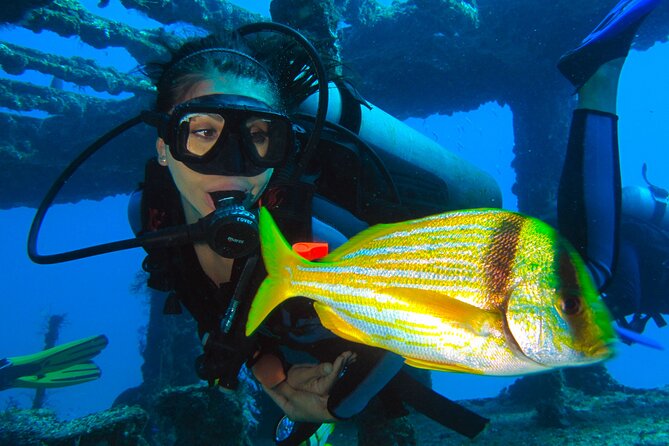
The listed price is $559 per person for a roughly 2-day course. For new divers, that price structure is usually the main question: does it cover the stuff you cannot easily replace?
Here is what is included:
- PADI materials
- Theory and pool class
- 4 ocean sessions, including the Underwater Museum of Art (MUSA)
- Scuba equipment use
Here is what costs extra:
- Government fees: $20 per person
- Wetsuit rental: $10 per person
So your practical budget looks like $559 plus the $20 government fee, and then possibly $10 for the wetsuit. If you already own a wetsuit, you might save that $10, but the listing clearly flags wetsuit rental as an add-on.
To me, the value comes from two places. First, equipment use is covered. Second, the course includes four separate ocean sessions, not just one. Four water sessions give you repetition and chances to fix little issues before the day ends. If you learn best by practicing, this matters more than trying to pick the lowest price.
Coconut Divers’ Small-Group Format (and Why It Helps You Learn Faster)
This experience caps at a maximum of 4 travelers. That is not a throwaway detail. In a certification course, you are often waiting for your turn, asking questions, and getting corrections. A smaller group means you spend less time watching and more time doing.
It also helps during the parts that feel intimidating. Pool skills can be a lot at first, especially if you are thinking about breathing while you manage gear. With a small group, you are more likely to get direct feedback quickly rather than waiting for the schedule to catch up.
The meeting point is at Coconut Divers, Hotel and marina Sotavento on Blvd. Kukulcan Km 4.0 in the Zona Hotelera area. Start time is 8:00 am, and the activity ends back at the meeting point. That is a fairly tight, full-morning start. If you are someone who hates rushing, it is worth planning an easy morning before you go.
One more practical note: the provider lists a safe and clean place for personal belongings and gear storage. Courses like this can create small stress points. Knowing you have a proper place for your stuff helps keep your brain on the training.
Theory and Pool Skills: Where Confidence Is Built
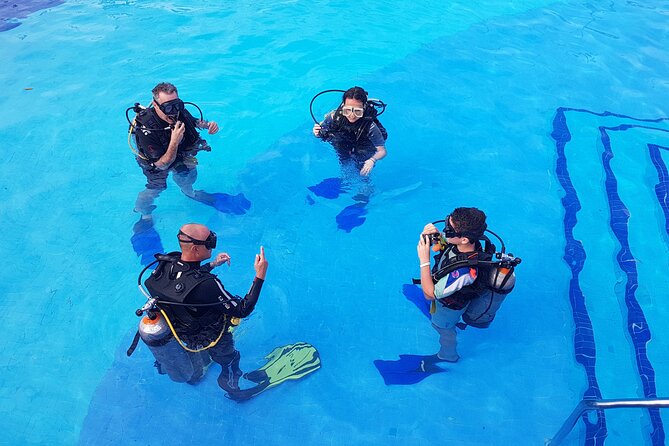
Even if you are excited about the ocean part, the course is really about what you do before you get there. The theory and pool class are included, and they are where you learn the rules of staying comfortable and safe.
In a PADI Open Water program, theory is not meant to be a random classroom day. It is supposed to explain what to do, why you do it, and what to watch for. Pool work then turns those ideas into actions. You will typically practice controlled skills where you can focus on your breathing and buoyancy without the extra mental load of open-water navigation.
This matters because the ocean part includes four separate sessions, not just a single taste. Better pool practice usually means less anxiety and smoother progress when you head out.
Also, instruction is offered in English. If English is your comfort zone, that can reduce the stress that comes from trying to decode instructions while wearing equipment.
Got a free afternoon? Here's what else is worth booking nearby.
- Chichen Itza, Cenote, and Valladolid Tour★ 5.0 · 24,293 reviews
- Chichen Itza, Cenote & Valladolid Tour with Tequila and Lunch★ 4.5 · 15,789 reviews
- Cancun: Chichen Itza, Cenote & Valladolid Tour with Lunch★ 4.6 · 6,722 reviews
- Early morning Chichen Itza Tour: Cenote and Tequila Tasting★ 5.0 · 6,657 reviews
- Private Roundtrip Transportation from Cancun Airport to Cancun Hotel Zone★ 5.0 · 5,086 reviews
Stop 1: Museo Subacuatico de Arte (MUSA) and Learning in Real-World Water
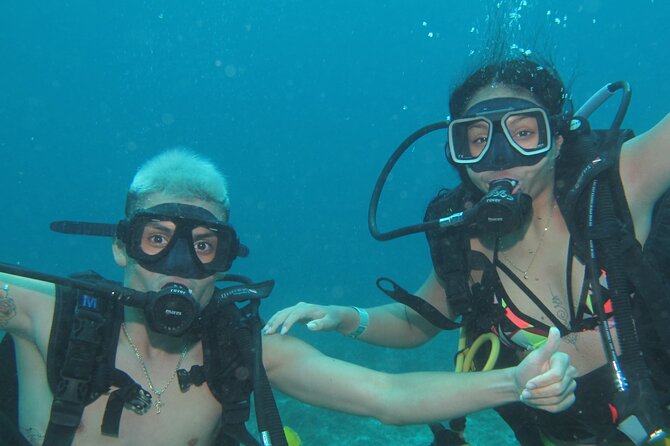
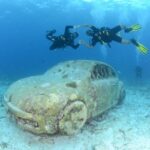
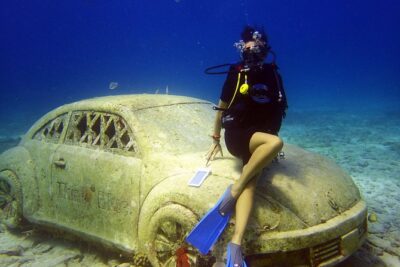
Your first big underwater landmark in the course is Museo Subacuatico de Arte (MUSA). The key point is that MUSA is not a quick sightseeing stop. It is part of the course ocean experience, included within the four ocean sessions.
What you can expect here is a balance: you are learning skills while also being in an area tied to underwater art. That can make training feel less like repetition for repetition’s sake. Instead of thinking only about checklists, you also have something meaningful to look at and talk about with your instructor.
There is also a practical side. MUSA provides an environment where the course is designed to happen. That means the training experience is coordinated around that site, rather than trying to improvise every part of the day.
One consideration: if you are someone who wants to see underwater art without thinking about skills, a course still requires your full attention. You will be focused on what you are doing, not just admiring. The upside is that you will leave with both memories and training progress.
Stop 2: Isla Mujeres, Plus the Caribbean Feel Between Sessions
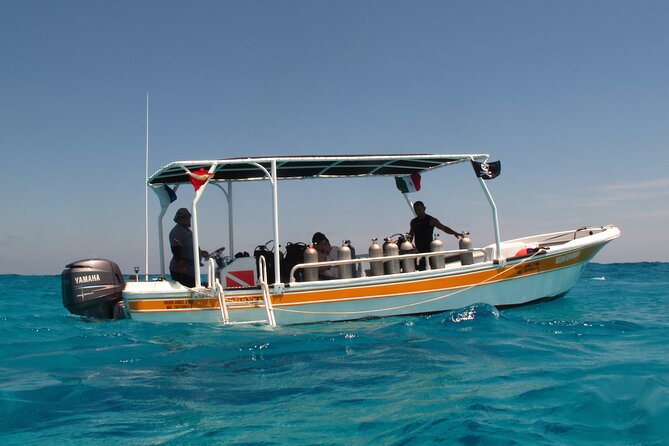
After the MUSA element, the course also includes a stop connected to Isla Mujeres. This is a smart pairing for many first-time scuba students. Cancun is a base with easy access and lots of activity, but Isla Mujeres adds a change of scenery, which helps keep the days from dragging.
Practically, what Isla Mujeres does for the training is simple. It gives you a second setting for your open-water experience, which can help you adapt. Different water conditions, different boat ride time, different sights on the way out, and different depth and entry moments. You are not just learning one formula. You are learning how to perform the skills in more than one situation.
In one way, this can be tiring. A full two-day schedule with multiple sessions means you need to pace yourself. In another way, it is exactly how you build real comfort. You learn faster when you do not feel like everything is happening in one unchanging bubble.
What the Instructor Team Adds (From Clear English to On-Boat Support)
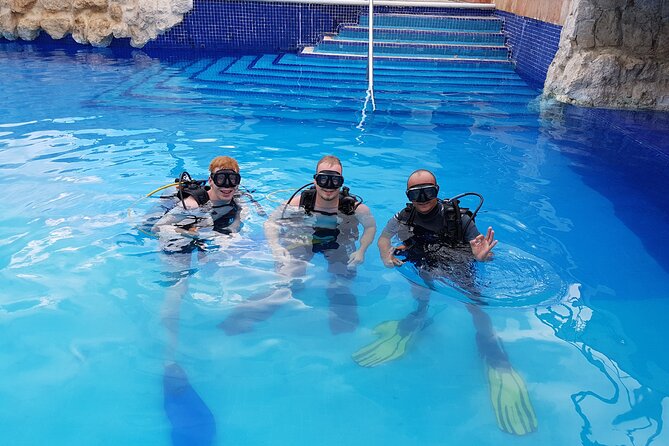
A certification course lives or dies on how well instructors explain things. In the experience reviews tied to this provider, the instructors include Manuel and Ulysses, and they are described as speaking clear English. That kind of communication is especially valuable during the moments when you are trying to remember steps while already focused on buoyancy, breathing, and staying calm.
On the boat side, one account highlights Captain Ricardo keeping things smooth, even when there was worry about rough seas and schedule changes. That might not guarantee perfect weather every time, but it suggests the operation takes safety and planning seriously.
There is also mention of photographer Poncho taking excellent pictures. If you like having proof beyond shaky phone photos, that is a nice bonus. Just remember: your main job is to learn. Photos are for later, while training is happening.
Gear Included Means Less Stress, Fewer Decisions
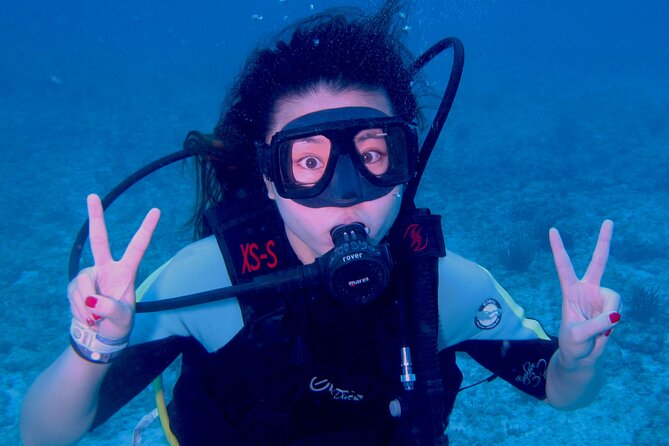
One of the best parts of this course, for first-timers, is that scuba equipment use is included. That removes a common headache: sizing, fitting, and last-minute rental logistics. It also reduces the risk that you show up with the wrong gear or something you are uncomfortable with.
Comfort matters underwater. If your gear fits well, you focus on technique. If something is awkward, it becomes an extra distraction during training.
The course also includes the right parts of the learning process, with PADI materials plus theory and pool class already included. So you are not paying extra for the structure. You are paying for the learning sequence and the ocean time that turns it into a real certification.
Weather and Scheduling, What You Should Expect in Cancun
This experience requires good weather. If it is canceled due to poor weather, you will be offered a different date or a full refund. In practice, that means you should treat the sea as a variable, especially if you are traveling during a season when conditions can swing.
The good news is the course is built as a guided program with a set start time of 8:00 am. If seas are calm, you can focus on learning. If seas are not, you need to be flexible and prepared for timing changes.
A tip that comes from how these programs usually work: if you are on a tight itinerary, leave a little buffer around your dive certification window. That way, weather adjustments do not wreck your entire trip.
Who Should Book This Course (and Who Might Reconsider)
This is a good match if:
- you want a legitimate PADI Open Water certification with ocean practice built in
- you like small groups and personal instruction
- you do not want to deal with equipment rentals
- you are excited by the idea of training at a place tied to MUSA
It may be less of a fit if:
- you need a completely guaranteed schedule with zero weather risk (weather can affect day plans)
- you are not comfortable with the idea that four ocean sessions require focus and practice, not just sightseeing
On the health side, the provider lists several medical considerations, including diabetes, asthma, high or low blood problems, and recent surgeries, and notes that most travelers can participate. They also list that under 10 years old is not included. Because the course involves underwater activity, you should take these flags seriously and check with the provider and your doctor if you have any relevant medical concerns.
Getting the Most Out of Your Two Days (Without Overthinking It)
Two-day courses can feel intense, but they are also efficient. The way to maximize your experience is to treat it like a learning workshop rather than a sightseeing tour.
Here is how I would approach it:
- Show up mentally ready to practice. Pool skills matter because they make the ocean sessions smoother.
- Keep your expectations realistic. Even if you are excited for MUSA and Isla Mujeres, your job during the ocean part is to follow instruction and build comfort.
- Ask questions early. With a group size up to 4, it is a good opportunity to clear up confusion before you are in the gear.
And if you are the type who likes to end the day with something tangible, this experience can do that for you. Between the ocean training and the possibility of getting photos through Poncho, you are likely to leave with more than just a certification card.
Should You Book This Cancun Open Water Certification?
If you want a structured entry into scuba with real ocean practice, I think this is a strong booking option. The value is clear: four ocean sessions with gear included, plus PADI materials and your theory and pool class. Add the small-group limit of 4 travelers, and you get a learning environment where you can actually get answers.
The main reason to hesitate is cost creep. Government fees and wetsuit rental are extra, so it helps to budget for those. Also, weather matters, so if you have a super tight trip with zero flexibility, you should plan a buffer.
But if you can work around the sea and you want a certification that you can use worldwide for a lifetime, this Cancun course is a smart way to spend two days. Training at MUSA and including Isla Mujeres also gives your learning story a sense of place, not just a checklist of skills.
FAQ
What is included in the PADI Open Water course price?
The price includes PADI materials, theory and pool class, use of scuba equipment, and 4 ocean sessions, including the Underwater Museum of Art (MUSA). The PADI Open Water certification is valid lifetime worldwide.
Are scuba gear and equipment included?
Yes. Use of scuba equipment is included in the course.
What extra costs should I budget for?
Government fees are $20 per person, and wetsuit rental is $10 per person.
How long is the experience and when does it start?
The course is about 2 days. It starts at 8:00 am and ends back at the meeting point.
What happens if weather is poor?
This experience requires good weather. If it is canceled due to poor weather, you will be offered a different date or a full refund.
What is the cancellation policy?
Free cancellation is available up to 24 hours in advance for a full refund. If you cancel less than 24 hours before the experience starts, the amount paid is not refunded.
Just added out of Cancun
- 4hrs / 46ft Catamaran Private Charter From Cancun to Isla Mujeres★ 5.0 · 3 reviews
- Entertainments and Celebrations in Cancun and Isla Mujeres★ 5.0 · 3 reviews
- Discover Tulum, Coba, Cenote and Playa del Carmen★ 3.5 · 3 reviews
- Puerto Juarez Transportation From-To Cancun Airport★ 3.5 · 3 reviews
- Whale Shark from Cancun, Riviera Maya and Tulum All Inclusive★ 5.0 · 3 reviews
- Cancun Airport Shared Transfer★ 4.5 · 3 reviews
- Magical Bacalar Full Day Tour★ 4.5 · 3 reviews
- 4×1 Tulum Coba Cenote and Playa del Carmen★ 2.5 · 3 reviews
Scuba Diving, compared.
Diving in the Mexican Caribbean for Beginners | 2 Tanks 2 Dives | All Inclusive
Read our review →
Two Tanks Scuba Diving for Beginners in Cancun
Read our review →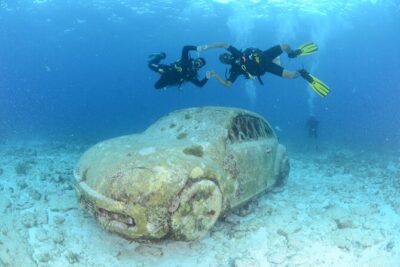
Scuba Diving Under Water Museum and Reef for beginners
Read our review →
Scuba diving at MUSA the underwater museum for certified divers
Read our review →
Diving in Cancun for Certified Divers | 2 Dives | All Inclusive
Read our review →
For certified Divers Experience the Under Water Museum and the Manchones Reef
Read our review →Browse the lists this tour appears in